How to Win Like a Loser

We often burn too much time and energy trying to win when all it takes is to make sure we do not lose!

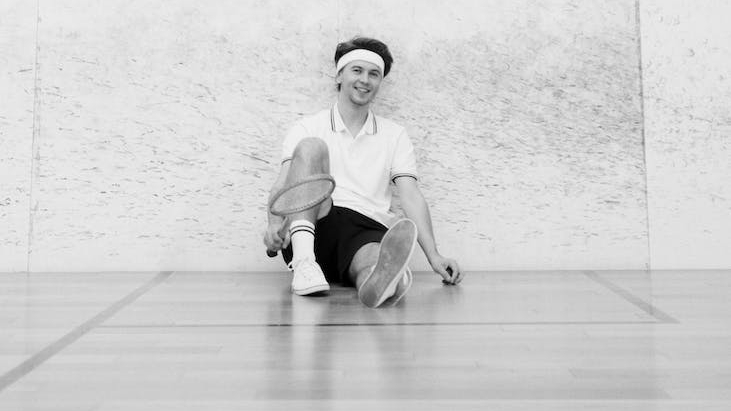
In my younger days, I used to play squash. I had a membership to a racquet club and played at least four or five times a week. But there was one player who managed to beat me every time I played him. For those who are unfamiliar with the sport – it’s a ball and racquet game played between two people in an enclosed court. A match consists of winning 3 games out of 5. This player always beat me 3 games to zero every time. I was never able to take even one game. 

It was frustrating because there was no reason for me not to win – or at least win some of the games. He wasn’t an exceptional player. He had no special gift or technique. I used to watch him play other people just to study his game. I thought of ways to take my game to the next level. Nothing worked! So why could I not get at least one game from this player?

One evening, I met up with a friend over a burger and a beer. It so happens that this friend was the one who had originally introduced me to the game of squash. During the course of the evening, I mentioned this particular player. My friend listened intently to my frustrations and then said something that changed my whole outlook on life.

He told me to stop trying to win!

Duh! WHAT!?

He went on to say that trying to win was obviously not working! He suggested that instead of trying to win, I should concentrate on not losing!

Now, I gave this a lot of thought and realised, ironically, ‘winning’ and ‘not losing’ yielded the same result. So armed with this newfound insight, I changed my strategy. In the past, whenever it was my turn to play the ball, I invariably tried for a winning shot. It soon became apparent that this was a complete and utter waste of time and effort. Instead, I started to play, not to win the round per se, but to make it as difficult as possible for my opponent to play a winning shot. Better still – if I placed the ball such that he could not hit the ball to the front wall, I had won the round regardless and with very little effort.

A few weeks later, I signed up for a club tournament. I breezed through the first two rounds of the tournament, and as luck would have it, I was drawn against this particular player in the third round. This was the player from whom I had never won a game, never mind a match.

It was a tough match, and he did win the match. However, the score was 3-2. Yes! For the very first time, I had won not only one game from him but two games. Deservingly, he went on to win the tournament, but nonetheless, I managed to win two games from him – all because I played to not lose.

This lesson went on to serve me well in life. We often burn too much time and energy trying to win when all it takes is to make sure we do not lose!


© Copyright 2023 – MAC

Democracy Part 3

Elections are where people are tricked into believing that every one of them is equal because each and every one of them has an equal vote.

Go to Democracy Part 1
Go to Democracy Part 2

Party Time

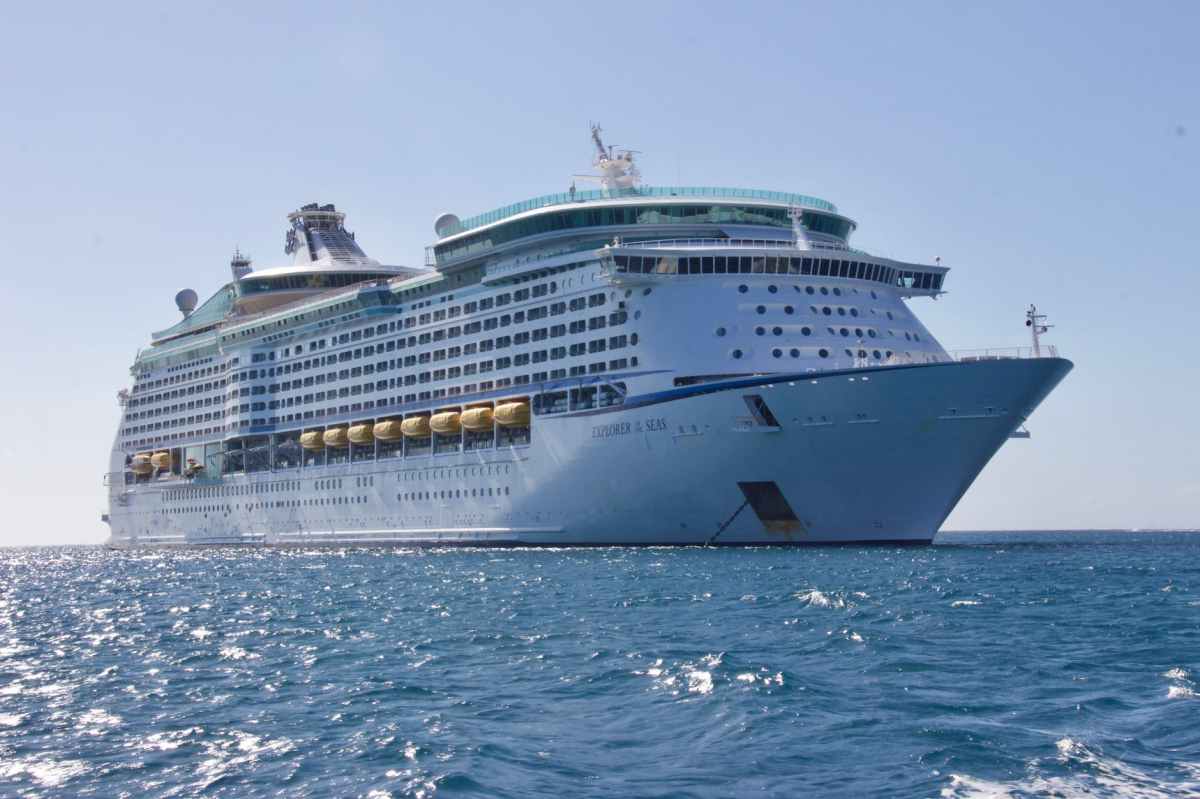
Let’s go back a few decades or so to a time when people travelled across the oceans in luxurious steamships known as liners. During that period, these liners were divided into 3 classes. There was First Class in the upper cabins, Second Class in the lower cabins, and lastly, there was the Third Class, often referred to as Steerage. Usually, the Steerage passengers were emigrants heading for a new future. Living conditions in Steerage were somewhat appalling with its small rooms with double-tiered bunk beds and common ablutions.

Today, there are only but a few such ocean-going liners, mainly because it’s a lot less expensive to fly – plus, nowadays, it only takes a few hours to cross an ocean by plane. Incidentally, none of these modern liners has a Steerage section.

Passengers wanting a sea-going experience now turn to luxury cruise ships with their beam-to-beam smorgasbords and all varieties of non-stop entertainment.

So what does this have to do with democracy?

Sometimes, we are so close to a problem we fail to see it, or as the saying goes – sometimes it’s hard to see the forest for the trees. It’s even harder to see the tree when your nose is pressed up against the bark. There is only one way to overcome a problem like this and that is to look at a parallel problem. So, to that end, we’re are going to use a parable – a story of pure fantasy – just to help you get a glimpse of what is staring you in your face.


Imagine one of those great steamships of yesteryear leaving Southampton, a port on the south coast of Great Britain, and heading out towards the Atlantic.

Soon after it is underway, the passengers learn that the destination is not what they expected. The First Class passengers wanted to experience the hustle and bustle of New York City, while the Second Class passengers wanted to head to the warmth and sun in and around Miami, and the Third Class passengers, well, they had all set their sights on Halifax and the opportunities that awaited them in Canada.

To address the eruption of protests, the ship’s captain decided the only fair thing to do was to have a vote. Fair enough, but that was when things began to unravel. The frenzy leading up to this vote found members from each class trying every method possible – including coercion, payoffs, bribery, promises, etc., to persuade people from other classes to vote in their favour.

Once the counting of the votes was done, none of the three classes had a clear majority. In hindsight, with three classes, a majority was perhaps somewhat unrealistic.

However, never underestimate the devious mind.

The leaders of the two classes that each gained the least votes collaborated to upend the results. They argued that their collective votes represented the majority of the passengers, thus overthrowing the class that had got the most votes. Of course, this turn of events came after the fact, and so many pointed out that this was contrary to the spirit and intent of the original purpose of the exercise. The class with the most votes cried foul and went on the defensive. The passengers in the other two classes were left wondering what would happen next since they were also at odds with each other.

The only thing that every passenger was in full agreement with was – nobody was happy with the final outcome.

So instead of acting like grownups, all the passengers decided to squabble and fight. In the meantime, the ship just floated aimlessly while the navigators waited patiently for a destination so they could chart a course.

That’s when someone from Steerage had a brilliant idea. This passenger met with the stokers. Now, the stokers are the team of workers who keep the fires going that creates the steam that ultimately drives the ship’s engines. The stokers could relate to the Steerage passengers’ plight and collectively stopped working until the captain of the liner agreed to head the ship to Halifax in Nova Scotia, Canada.


OK – so this was an amusing little tale that obviously never really happened!?

But it’s not so amusing when you stop and realise this is exactly how today’s elections, held in democratic countries, are run. At least, the passenger and cruise ship companies adapted to the times and did away with the class system aboard their vessels. However, governments have doggedly hung on to their ignominious, antiquated and self-crippling forms of government, ones that ultimately demoralise the people it serves. These governments have become lumbering systems that ultimately divide the population due to their conflicting purpose – or in many cases – a lack of purpose.

It’s hard to imagine why we still adhere to the notion that democracy in its present form is such a wonderful system! Or as Winston Churchill said. “Democracy is the worst form of government – except for all the others that have been tried.”

Our elections are nothing more than a farcical exercise where parties, each supposedly representing a different class of citizen, all of whom are collectively tricked into believing that every one of them is equal because each and every one of them has an equal vote.

Perhaps, governments could take a page out of the Cruise Ship Handbook and do away with the class system altogether. Wouldn’t be nice if a country was united. A country where everyone can happily sail – all in the same direction – just like the passengers on a modern-day cruise ship.

How would you vote?


Democracy Part 4 – The Campaign (coming soon)


© Copyright 2023 – MAC
The Village Idiot

I’m certainly not above reproach as I have done some stupid things in my time. I’m sure we all have. But unlike today, I didn’t go looking for stupid things to do.

No one was ever actually designated as the village idiot, although I knew a few people who could easily have qualified. No, the term was used somewhat hypothetically. For example – if I did something stupid, my parents would warn me about becoming the village idiot. At the time, most parents used the same tactic and it collectively helped us kids from doing stupid things. To be known as the village idiot was far worse than the stupid thing we were about to do and so we didn’t do it – well, most of the time.

I’m certainly not above reproach as I have done some stupid things in my time. I’m sure we all have. But unlike today, I didn’t go looking for stupid things to do. None of us did. None of us wanted to be the village idiot.

Andy Warhol once said, “In the future, everyone will be world-famous for 15 minutes.” Well, Andy – that ‘future’ you referred to seems to have arrived when social media allowed acts of stupidity to be encouraged and admired.

Social media has provided platforms whereupon people can get attention by performing acts of stupidity. How stupid do you have to be to think that doing something stupid is something to be admired? Apparently, there are THUMBS UP buttons that are used to encourage these stupid people. 

There is a popular saying – “Don’t make stupid people famous!”

So, let’s look even further into our future. For example, when will acts of stupidity become an Olympic event? Perhaps one day, universities will offer degree courses in stupidity. Who knows – perhaps I could get a PhD. in stupidity! But I think that would be stupid!

Perhaps Pamela Clare is right when she said – “There is no cure for stupid.”

Long live the village idiot, whose ideology gently steered us to make smarter decisions.

Updated May 23, 2023


© Copyright 2023 – MAC

A Dog’s Life

In team sports, the goal of the game is to win, and the side that has scored the most goals fulfils its goal – along with a pretty trophy!

Every day, we encounter situations where we have to make decisions. Some are what we call a no-brainer, and some are perhaps more complicated. Regardless, each day we are all faced with a bombardment of decisions – that’s life.

However, there are some things that, once they are brought to our attention, seem so obvious we go along with them without any thought whatsoever. It’s as though we are presented with a problem we never knew existed followed by an instant solution, one we could never have imagined. It was like a decision had been made for us, and the process didn’t hurt one little bit. For example, as early as 1935, Cecil Mace, a philosopher, embarked upon the theory of setting personal goals. From my own experience, this became a huge phenomenon in or around the late-1960s when a culture of instant experts jumped on the goal-setting bandwagon and began preaching the features and benefits of personal goal-setting to the gullible masses eagerly clambering to be on board. All we had to do was set a goal.

It was magic! I seemed like the silver bullet for happiness.

It was an easy market to exploit. We already understood goals. We scored goals in sports such as hockey or soccer, but when it came to actually setting goals – personal goals – the gurus of this movement made setting goals so eloquent and look so simple we all experienced what we thought was a blinding glimpse of the obvious. So, without any necessary encouragement, we all followed these proverbial Pied Pipers.

In team sports, the goal of the game is to win, and the side that has scored the most goals fulfils its goal – along with a pretty trophy! But in life, we are not living to win – life is not a contest. Therefore, why should we need these wonderful goals?

When we set goals – only one of two things happen – we either achieve them or we don’t!

Those who failed to reach their goals, in an effort to boost their self-esteem, might argue that they haven’t reached their goals – YET! Whatever!

In the real world, until you succeed – you have failed. Thomas Edison might seem to disagree with this sentiment when he said, “I have not failed. I’ve just found 10,000 ways that won’t work.” But we’re not inventing a light bulb – we’re trying to live a happy and fulfilling life!

The reality is – those who are trying to achieve their goals are unhappy because they believe they can only be happy once they have achieved their goals. Those who have reached their goals suddenly realise they either don’t know how to be happy or they have forgotten what happiness is.

The sad part of all this is – the only way these folk can ever strive to achieve their goals is when they are unhappy. Once they succeed, they fall back to their happy place which is to set even higher goals so they can be unhappy once more trying to be happy. Instead of being the silver bullet for happiness, it’s more like chasing the end of a rainbow searching for a pot of gold!

If you find this confusing – get a ball and go and play with a dog! You’ll no doubt get tired before the dog does, so sit down, take a moment, catch your breath and think about what that dog’s goals were versus what made that dog happy!

How happy are your goals?
Let me know in the comments below.


© Copyright 2023 – MAC

The Pharmacy Phenomenon

I’m not saying we should turn our backs on modern medicines, but nor should we be too quick to dismiss traditional remedies.

For years I suffered from stomach problems – from constant discomfort to unprovoked vomiting. I was prescribed all kinds of wonder drugs. They all seem to come with a warning list as long as my arm. Besides a magnifying glass to read the super-fine print, I’d need a pharmacology degree just to pronounce some of the ingredients, let alone know if I was allergic to any of them or not. These little man-made delights seem to have more possible side effects than I can count on both hands – things like seizures and sudden death.

After talking to a colleague about my stomach troubles and the reason why I didn’t feel like going for lunch with him, he gave me the name of an acupuncturist. Until then, it hadn’t crossed my mind to seek medical help other than from the local family doctor. But I consider myself sufficiently open-minded, so I was not going to dismiss something that has been around for thousands of years or because it didn’t fall into the realm of what we consider modern medicine.

So I went to see this acupuncturist – a nice gentleman. He told me to stick my tongue out. He reached for a very large book. On every page of this cyclopedia, I noticed there were pictures of tongues – hundreds if not thousands of pictures of tongues. He found one which I assumed looked like mine. He then told me I didn’t have a stomach problem but a problem with my spleen. I’m not a biologist. Other than knowing I probably have a spleen, I don’t know what function a spleen performs or even where it’s located.

He had me lay on my back and he proceeded to stick a very fine needle into my abdomen and another in the area of my left knee. He then attached electrical leads to each needle and switched on some sort of device. There was a slight but not unpleasant sensation. While this was happening, he reached for three or four large jars that contained stuff – stuff that resembled something I’d occasionally sweep off my doorstep and walkway. He concocted a mixture from these jars and put it in a brown paper bag. He explained that when I get home, to boil this mixture in water for half an hour and then drink the then dirty brown liquid over the next three days. I did as he suggested – it tasted dreadful.

I’m not saying we should turn our backs on modern medicines, but nor should we be too quick to dismiss traditional remedies. I received that one-time treatment over thirty years ago, and since then, I have never experienced any more problems with my stomach or my spleen.

Tell me your thoughts on medicines in the comments below.


© Copyright 2023 – MAC

A Day in Court

Is our system of justice so divorced from reality it has become nothing more than a farce.

This was both interesting and disturbing.

I arrived early and sat patiently in court watching with passive interest the various traffic offence cases being processed. I had been subpoenaed as a witness.

One case caught my attention.

An older man was up before the court. He seemed to have limited English. Beside him stood, whom I assumed, was a court-appointed official, supposedly to help him understand and or translate what was being said. The Magistrate, the official and the prosecutor were bantering back and forth and suddenly the proceeding came to a stop. At that point, the old man turned to walk down the centre aisle. There was no reason for me to become interested in this particular case until the old man was greeted by some friends and family who had been sitting close to where I was seated. One of his family asked him, “Did you win?”

To this day I am haunted by his answer. He said, “I don’t know!”

How can this charade – this so-called system of justice – leave this old man not knowing or even understanding the verdict?

Is this system so divorced from reality it has just become nothing more than a playground on which an out-of-touch profession preys on the misfortunes of others to perpetuate its existence?

Like that old man in court – I don’t know.


© Copyright 2023 – MAC

Democracy Part 2 

It could be considered entertaining if this was a reality show. Unfortunately, it is reality and our very future depends upon the results.

Go to Democracy Part 1

The Trilemma

Ah, to be Canadian!
But I’m sure the same thing happens in other countries.

Canada has a variety of political parties. At election time they rally the troops, and with wild and unbridled enthusiasm and desperate optimism, they all start spouting what they will do WHEN (not IF) but WHEN they are elected. Here’s the reality – only one party gets elected! 

While the three main contenders sling mud at each other, they attempt to ignore the rantings of the wannabe parties.

Sadly, these minority parties never seem to get their fair share of votes because voters tend to think of it as a waste if that party has no chance of getting ever elected. It has all the makings of being a bit of a self-fulfilling prophecy. 

The closer we come to elections day, the more ludicrous it becomes. Party leaders praise the polls that put them ahead, while the runners-up decry the very same results. Parties don’t tend to have much to offer and soon run out of things to flaunt.  That’s when the tide of decency starts to ebb and the only tactic left in a party’s arsenal is to then to start indiscriminately bashing the opponents. Sadly, there is no depth in the murky sea of decency to which a party will not sink in its attempt to discredit its opponents. The idea behind this tactic is to come out looking like the least worst option come election day. 

What a circus!

It could be considered entertaining if this was a so-called reality show, but unfortunately, it is real – and our very future depends upon the results.

Here’s the trilemma I once faced!

Shortly after moving to a new area, there was a General Election.

The then-current Prime Minister and leader of the party that advocated some sort of long-term plan, was someone who tried to put a positive spin on every venture that he and his party had successfully failed to accomplish during their term in office.

The Leader of the Party that won’t be happy until everyone is equally poor, came across as being very sincere and competent. He seemed very likeable. 

The local Member of Parliament had been around for many years, and from what I could determine, did a very excellent job of representing his constituents, but he belonged to the party that advocated equality for all, just as long as they fell into that ‘middle class’ demographic. To paraphrase a line from ‘Animal Farm‘ by George Orwell – In Canada everyone is equal, but the middle class are more equal than others.

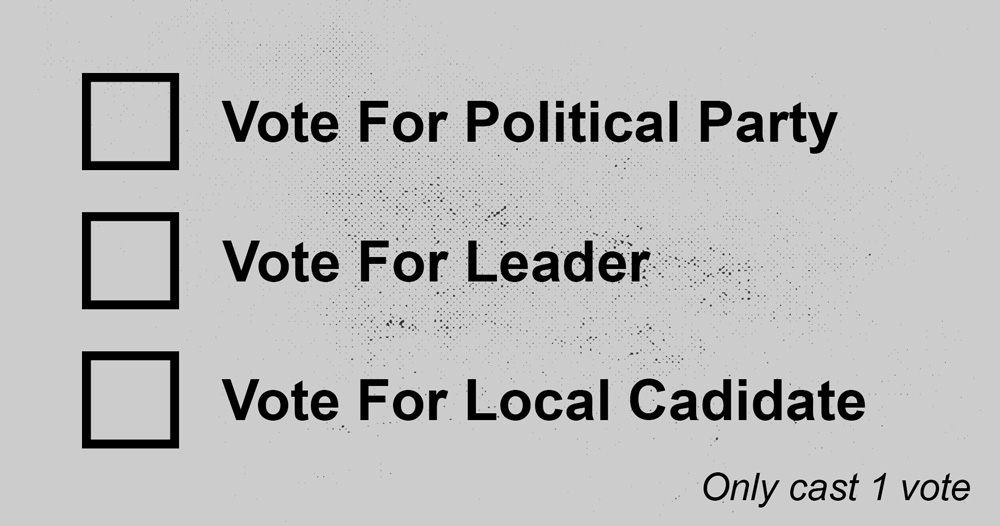
BUT here was my problem – I only had ONE vote!

How could I possibly cast ONE vote for someone who I thought was and would continue to do a fine job, AND for someone who I thought would make a fine leader, AND also, for a party that had some sort of grasp of the custodial responsibilities of running a viable government?

I have long forgotten the outcome of that election simply because I just thought my vote was pointless.

How would you vote? Let me know in the comments below.


Democracy Part 3 – Party Time


© Copyright 2023 – MAC

A Road Much Travelled

Imagine an NHL hockey game, a figure skating contest, public skating, and a speed-skating race all taking place all at the same time, all on the same ice rink.

Two thousand years or so ago, the Romans built an incredible system of roads throughout Europe. The idea was to get troops and supplies efficiently from one place to another, but since the history and evolutions of roads is well documented, there is no need to reiterate the obvious other than to say – people still need roads.

Like everything, roads have evolved. An original Roman road would look like a primitive trail compared to one of our multi-lane highways. But perhaps we should take a serious look at and evaluate the purpose of these asphalt wonders.

We have trucks of all shapes and sizes bringing food and goods to our urban centres, and there are trucks that cart away our waste. We have buses transporting people from here to there on a fixed schedule. We have passenger vehicles doing the same as buses but on a personal level and on a more flexible schedule, and to complicate matters, we have emergency vehicles, police vehicles and maintenance vehicles, plus small economy vehicles, motorcycles and a host of other road users, including folks who are just out for a joy ride.

When we break this down even further, we have everything from a 53 foot tractor trailer so laden down it needs to go through half a dozen gears just to get going, to small vans nipping here and there making local deliveries. We have buses stopping at every intersection to either pick up or drop off passengers while other buses are on an express schedule destined to arrive at a bus terminal. When it comes to passenger vehicles, we have 300 hp plus performance vehicles capable of exceeding the posted speed limits 2 to 3 times – all competing for the same road space.

All these trucks, buses, passenger vehicles, and cycles are trying to share the same road all at the same time. None of this makes any sense.

Allow me to put this into perspective.

Imagine an NHL hockey game, a figure skating contest, public skating, and a speed-skating race all taking place simultaneously on the same ice rink. Of course, it’s ridiculous and, perhaps, unimaginable, but what I just described is the equivalent of what we do on our roads every single day.

Just like ice rink usage, where various events are scheduled, perhaps we need to schedule the various types of traffic to certain times of the day. For example, perhaps trucks should only be allowed into a city centre between certain hours and commuter traffic should only be allowed in and out of a city during given periods. Of course, this concept would have to evolve over time. There would also have to be some overlap – some exceptions due to circumstances, including emergencies.

But we need to manage traffic better, such as reserving certain lanes for certain types of traffic. We have a bit of that now with the introduction of HVO (High-Occupancy Vehicle) lanes, but this has to go further. A Porsche GT4 stuck between two trucks makes as much sense as Isabeau Levito (U.S. figure skating champion) being pinned between two Boston Bruins defensemen while trying to avoid a parent teaching their kid how to stand up on skates.

Let me know what you think in the comments below.


© Copyright 2023 – MAC

Updated – May 20, 2023

The Good Old Days

Some people refer to those earlier years as the good old days, but I’m not convinced they were all that good – but then, everyone has a different opinion.

Yes, we elders often talk about days long past, but that’s because we actually lived and experienced them. Some people refer to those earlier years as the good old days, but I’m not convinced they were all that good – but then, everyone has a different opinion.

Let’s take a look at the past century.

Sure, there were the roaring twenties, but there were also two devastating world wars and the great depression. Then we lived under the threat of the cold war. On the homefront, there were the hardships – many people had to make do with what they had. Nothing or very little got thrown away. Just about everything got reused. There were food shortages and so no food was ever wasted. We ate everything given to us. Stale bread got made into toast and any leftover food got made into soup. If and only if, there was anything left over, it was fed to pets or perhaps farm animals. Even a trifle is made from leftovers – hence the name, trifle.

Then there, were the ongoing diseases such as diphtheria, polio, tuberculosis, smallpox, Spanish flu, etc.

Dentistry centred around extractions rather than fillings and most people had dentures by the time they were in their thirties. Nitrous Oxide (Laughing Gas) was the anaesthesia of choice – if you were lucky, otherwise, it was painful. 

Nothing was thrown away. Within a family, a child’s clothes were often handed down from one child to the next. My pram (baby carriage) eventually became my sister’s pram.

Only the very wealthy had cars. The rest of us, if we were lucky, owned a bicycle. Longer trips were made on the bus, and even longer trips were made by train.

I was 11 by the time we lived in a house with an indoors flushing toilet. By the way, toilet paper was yesterday’s newspaper torn into squares.  

I could go on but the point I’m making is, compared to what we have today, one could hardly say those times were Good Old Days!

Having said that – those early days were the happiest days of my life.

Yes, I have had happy times, but overall, I am not particularly happy. I look around and I’m saddened to see so many unhappy people. 

In recent years there seems to have been a general shift in what we deem as happiness. Today, we are encouraged to buy things on the promise that they will make us happy. But when that ‘happy moment’ stops, we experience some sort of withdrawal while we search for something else that will make us even happier.

The corporate ‘drug dealers’ encourage us to trade in our perfectly good mobile phones for the latest models. Bigger and better this and that! Why? What’s more important – having the latest and greatest phone or the phone’s function and purpose?

The KPD factor

Many years ago, I decided to upgrade my stereo system. So off I went to an electronics store. The salesman asked me if I was looking for sound quality or KPD. I already had a stereo system but I wanted one that sounded better, so obviously I was looking for better quality. However, curiosity caused me to ask what was KPD. Knobs Per Dollar! He went on to explain by showing me the Mono-Stereo switch on a Receiver/Amplifier. Why is this here he asked. It will always be set to stereo, so this switch’s only purpose is to make the front panel look complex just for show. At that point he showed me another unit where the focus was about quality of sound. Guess which one I bought?

Happiness comes in many forms but don’t confuse happiness with what makes you happy.  


Let me know what makes you happy in the comments below.


© Copyright 2023 – MAC